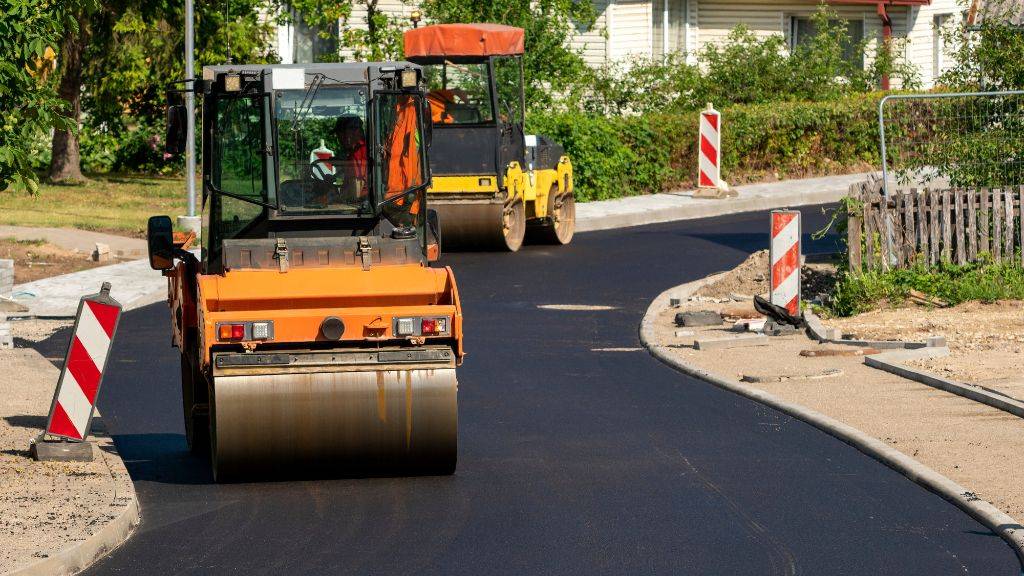
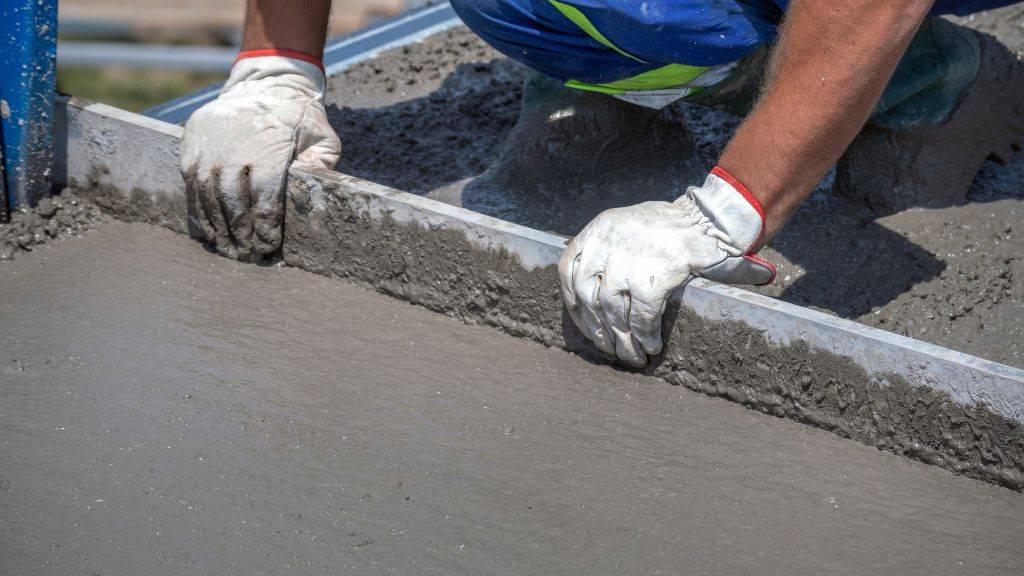
Most fall maintenance conversations start with asphalt. Parking lots get walked, cracks get filled, sealcoating gets scheduled. Concrete curbs, sidewalks, stairs, and loading dock aprons often get folded into that same conversation as an afterthought, inspected on the same walkthrough and scheduled on the same timeline as the asphalt work around them.
That approach misses something important. Concrete does not fail the same way asphalt does, and it does not run on the same repair calendar either. Concrete needs more lead time to cure properly, it responds to moisture and freeze-thaw cycling differently than asphalt does, and the damage it shows, spalling, scaling, and joint failure, looks nothing like the cracking and potholing that shows up in a parking lot.
For property managers overseeing commercial sites, that difference matters most in early fall, before the same freeze-thaw cycle that damages asphalt starts working on every piece of concrete on the property.
In this article:
- Why Concrete Needs an Earlier Deadline Than Asphalt
- How Concrete Actually Fails in a New England Winter
- Curbs and Curb Lines: Small Damage That Creates Real Liability
- Sidewalks, Ramps, and Stairs: Where Trip Hazards Turn Into Claims
- Loading Dock Aprons: The Concrete That Takes the Hardest Hit
- Pool Decks and Amenity Concrete: A Seasonal Deadline of Their Own
- Joint Sealant and Expansion Joints: The Detail Most Properties Skip
- Patch, Resurface, or Replace: How to Triage Concrete Damage
- The Insider Mistake: Treating Concrete Like Asphalt
- A Practical Example: A Retail Property’s Early Fall Concrete Review
- What to Look for in a Concrete Repair Contractor
Why Concrete Needs an Earlier Deadline Than Asphalt
Asphalt repairs have a fall deadline, but concrete’s deadline usually comes earlier, and a lot of properties do not realize that until it is too late in the season to act on it.
Concrete needs a longer stretch of consistently mild temperatures to cure properly than asphalt does. Pouring or patching concrete too close to the first hard freeze risks a surface that never fully cures, which weakens it before it has even had a chance to be used. Asphalt repairs can often still be completed later into the fall than concrete work can, which means a property that schedules both on the same calendar risks running out of usable weather for the concrete portion first.
Early fall, while there is still a meaningful stretch of mild weather ahead, is the right time to walk the property specifically for concrete issues, separate from whatever asphalt inspection is already planned.
How Concrete Actually Fails in a New England Winter
Concrete and asphalt respond to a New England winter in different ways, and a property manager who only knows what to look for in asphalt can walk right past early concrete failure without recognizing it.
Concrete is porous, which means it absorbs moisture. When that moisture freezes, it expands inside the concrete itself, not just in a surface crack the way it does with asphalt. That internal expansion causes scaling, where the surface layer flakes or peels away, and spalling, where larger chunks of the surface break off entirely. Salt used for winter de-icing accelerates this process significantly, since it increases the number of freeze-thaw cycles the concrete goes through and interacts chemically with the surface in ways that speed up deterioration.
None of this looks like the alligator cracking or potholing that shows up in an asphalt lot. It looks like a rough, pitted, or flaking surface, sometimes with exposed aggregate where the top layer has worn away. A property manager checking concrete for the same signs of failure they would look for in asphalt can easily miss active deterioration that is already underway.
Curbs and Curb Lines: Small Damage That Creates Real Liability
Curb damage often gets treated as cosmetic, but a damaged curb line creates real liability exposure that has nothing to do with how it looks.
Cracked or crumbling curbs near drive lanes and drop-off areas can catch a tire and send debris into a parking lot. Curbs that have shifted or settled create uneven transitions that are difficult for pedestrians to navigate safely, especially in poor lighting or when snow is covering the exact edge where the curb meets the pavement. Curb damage near accessible parking spaces carries additional weight, since accessible routes need to stay level and free of hazards.
A fall walkthrough should treat curb lines as a priority inspection item rather than a background detail, particularly along drive lanes, near building entrances, and around accessible parking areas.
Sidewalks, Ramps, and Stairs: Where Trip Hazards Turn Into Claims
Sidewalks, ramps, and stairs carry more foot traffic per square foot than almost any other concrete surface on a commercial property, which makes even minor damage in these areas a higher priority than the same damage elsewhere.
Look for cracked or uneven sidewalk panels, especially where one section has settled relative to the panel next to it, since that kind of height difference is a common trip hazard. Check ramps for surface deterioration that affects traction, particularly on accessible routes where a compromised surface creates a real safety issue. Review stairs for edge damage, uneven risers, or spalling that has worn away the non-slip texture on the tread.

These are also the areas most likely to generate a liability claim if left unaddressed, since a fall on a damaged sidewalk or stair is far more likely to result in an injury than similar damage in a low-traffic parking area.
Loading Dock Aprons: The Concrete That Takes the Hardest Hit
Loading dock aprons deal with a combination of weight, moisture, and constant vehicle contact that most other concrete surfaces on a property never experience.
Truck tires apply significant, repeated pressure in the exact same spot day after day. Diesel exhaust and fluid drips can affect the surface over time. Water runoff from the building often concentrates near the dock area, which increases moisture exposure right where the concrete is already under the most physical stress. The combination tends to produce spalling and surface deterioration faster on a dock apron than almost anywhere else on the property.
A fall inspection of loading dock aprons should look specifically for spalling near the building edge, cracking radiating out from where trailer wheels regularly sit, and any drainage issue sending extra water toward the apron instead of away from it.
Pool Decks and Amenity Concrete: A Seasonal Deadline of Their Own
Apartment communities and hospitality properties with pool decks or other amenity concrete face a slightly different version of the same fall deadline.
Pool decks are typically closed for the season by early fall, which makes this the right window to inspect and repair them before the area sits unused and exposed through winter. Surface cracking, uneven pavers, or joint failure around a pool deck can worsen significantly if left through a full winter with nobody checking on the area regularly. Addressing these issues while the pool is already closed for the season means the repair work does not conflict with resident or guest use, and the deck is ready to reopen in spring without a rushed repair scramble right before the season starts.
Joint Sealant and Expansion Joints: The Detail Most Properties Skip
Expansion joints exist to let concrete move slightly as temperatures change without cracking. When the sealant in those joints fails, water gets into the joint itself, freezes, and can cause damage right at the edge of adjoining concrete panels.
A fall inspection should check joint sealant along sidewalks, curb lines, and dock aprons for cracking, gaps, or sealant that has pulled away from the concrete edge. This is a detail that is easy to miss on a quick visual walkthrough, since failing sealant does not always look dramatic until the damage it allows has already started. Resealing joints in early fall is a relatively small task compared to repairing the panel damage that results from months of water intrusion through a failed joint.
Patch, Resurface, or Replace: How to Triage Concrete Damage
Not every damaged concrete area needs full replacement, and treating every issue as a replacement project wastes budget that could cover more of the property.
A useful way to think through concrete repair priorities:
- Surface scaling or minor spalling on an otherwise sound slab can often be addressed with a resurfacing treatment rather than full replacement.
- Isolated cracking without significant height difference between panels can sometimes be patched or sealed rather than replaced.
- Panels with significant settling, heaving, or height differences relative to neighboring panels usually need full replacement, since patching cannot correct the underlying movement.
- Areas with repeated failure in the same spot, despite previous patching, usually point to a drainage or base issue that needs to be addressed before any further concrete work is done.
A contractor who defaults to replacement for every issue is not necessarily giving a property the most useful recommendation. The right answer depends on what is actually happening underneath the visible damage.
The Insider Mistake: Treating Concrete Like Asphalt
Here is a mistake that shows up on properties that otherwise do a reasonably good job with fall maintenance. The concrete walkthrough gets scheduled at the same time as the asphalt walkthrough, on the same calendar, with the same sense of urgency.
The asphalt work gets completed with room to spare, since asphalt has a slightly later usable window. The concrete work, scheduled for the same timeframe, ends up squeezed against an earlier deadline it was never given credit for, sometimes completed in weather that is already too cold for the concrete to cure properly.
The more effective approach treats concrete as its own inspection and scheduling item, checked earlier in the fall specifically because it has less runway than asphalt does. A property that separates the two schedules gives the concrete work the lead time it actually needs instead of borrowing time from a deadline that belongs to a different material.
A Practical Example: A Retail Property’s Early Fall Concrete Review
Consider a retail property with a customer entrance, an accessible ramp, a loading dock behind the building, and a row of curbs along the main drive lane.
An early fall walkthrough finds spalling starting to form near the edge of the loading dock apron, a section of sidewalk near the entrance with a noticeable height difference between two panels, joint sealant that has pulled away along most of the accessible ramp, and a curb section near the drive lane that has cracked and shifted slightly out of line.
A practical early fall concrete plan for a property like this might include:
- Resurfacing the loading dock apron where spalling is still limited to the surface layer
- Full panel replacement for the settled sidewalk section near the entrance, since patching cannot correct the height difference
- Rejointing the accessible ramp before failed sealant allows water into the joints over winter
- Curb repair or replacement along the affected section of the drive lane
Scheduling this work in early fall, ahead of the asphalt repairs happening elsewhere on the property, gives the concrete enough time to cure properly before consistently cold weather arrives.

What to Look for in a Concrete Repair Contractor
Concrete repair requires a different set of judgment calls than asphalt repair, and the contractor handling it should understand both the material and the New England timeline it operates on.
Property managers should look for a contractor that can show:
- The ability to distinguish surface scaling from structural spalling and base movement, rather than treating all concrete damage the same way
- A clear recommendation on patch, resurface, or replace, rather than defaulting to the most expensive option
- Awareness of concrete’s earlier curing deadline relative to asphalt, and a schedule that reflects that difference
- Experience with the full range of commercial concrete elements, including curbs, sidewalks, stairs, loading dock aprons, and pool decks
- Coordination with any related asphalt or drainage work happening on the same property, so the two schedules do not compete for the same narrowing weather window
Asphalt Services has handled concrete work alongside paving and site work for commercial and institutional properties across New England since 2003, operating as a family-owned company based in Woburn, MA, with an additional regional office in Salem, NH. The team handles flatwork, curbs, sidewalks, stairs, pool decks, and other concrete elements as part of the same full-service approach it takes to asphalt paving and repair, which means a property does not need a separate contractor and a separate schedule just for the concrete portion of its fall maintenance plan.
Key Takeaway: Give Concrete Its Own Deadline This Fall
Concrete repairs deserve their own inspection, their own priority list, and their own place on the fall calendar, separate from whatever timeline is already set for asphalt work on the property.
If your commercial property has curbs, sidewalks, stairs, loading dock aprons, or pool decks showing early signs of scaling, spalling, or joint failure, the time to schedule that work is now, while there is still enough mild weather left for the repair to cure properly.
Asphalt Services offers site evaluations that cover both concrete and asphalt conditions across a property, with a clear recommendation on what needs to happen first and how much runway is actually left before the weather closes the window. Contact Asphalt Services today to get your concrete repairs scheduled before freeze-thaw season sets in.