Most property managers think of spring as the season for pavement repairs. By the time fall arrives, the instinct is often to let the lot coast through to the next construction season and deal with whatever is left once the snow melts.
That instinct works against the property, not for it. Every crack, pothole, and drainage issue left unaddressed in October does not sit still over the winter. It gets worse, sealed under snow and ice while nobody is looking, and reappears in spring as a bigger and more expensive problem than it was in the fall.
For commercial and industrial properties across New England, fall is the last real chance to walk the lot, fix what needs fixing, and head into winter with a surface that can actually handle plowing, salt, and freeze-thaw cycling without falling apart. This checklist walks through what that inspection and repair process should actually cover.
In this article:
- Why Fall, Not Spring, Is When Pavement Problems Should Get Fixed
- Step 1: Walk the Full Property, Not Just the Main Lot
- Step 2: Check Every Crack Before Winter Seals It Shut
- Step 3: Evaluate Potholes and Soft Spots for Repair Priority
- Step 4: Confirm Drainage Is Actually Working
- Step 5: Decide Whether Sealcoating Still Fits the Calendar
- Step 6: Refresh Striping and Markings Before Snow Covers Them
- Step 7: Review Concrete Elements Separately From Asphalt
- Step 8: Line Up Snow Removal Before the List Fills Up
- The Insider Mistake: Treating Fall Repairs as Optional Because Spring Will Be Fine
- A Practical Example: A Distribution Center’s Fall Walkthrough
- What to Look for in a Fall Maintenance Partner
Why Fall, Not Spring, Is When Pavement Problems Should Get Fixed
The common assumption is that pavement damage is a spring problem, something that shows up after the snow melts and gets fixed once the weather warms back up.
That assumption gets the sequence backward. The damage that shows up in spring was almost always caused during the winter that just ended, and winter damage is driven directly by what condition the pavement was in going into the cold months. A crack that is filled in October stays a small, manageable repair. The same crack left open through winter lets water in, freezes, expands, and turns into a larger structural problem by the time spring arrives.
Fall is also the last window where asphalt repairs, crack filling, and sealcoating can actually be completed. These materials need warm enough temperatures to cure and bond properly. Once temperatures drop consistently below the range these materials need, the work either has to wait until spring or gets done in conditions that compromise the result. That is why a fall inspection and repair pass matters more than most property teams give it credit for.
Step 1: Walk the Full Property, Not Just the Main Lot
A fall inspection should cover the entire property, not just the areas that get the most daily attention.
- Main parking areas and customer or employee lots
- Drive lanes, entrances, and exits
- Loading docks and service areas
- Overflow or secondary parking areas that may get less regular use
- Fire lanes and emergency access routes
- Sidewalks, curb lines, and pedestrian paths connecting the lot to the building
Secondary areas are often where problems go unnoticed the longest, simply because fewer people walk or drive through them regularly. A loading dock apron with a growing crack network or an overflow lot with a failing drainage swale can go unaddressed for years if nobody includes it in the annual walkthrough.
Step 2: Check Every Crack Before Winter Seals It Shut
Cracks are the single most common issue found during a fall pavement inspection, and they are also the easiest and least expensive to address while the weather still allows it.
Look for cracks that:
- Run in long, connected lines rather than isolated hairline marks
- Have started to widen or branch into secondary cracks
- Sit near drainage points, curb lines, or areas where water already tends to collect
- Show signs of previous crack filling that has failed or separated
Crack filling done in fall keeps water from getting into the base over the winter. Left unfilled, the same cracks widen through repeated freeze-thaw cycling, and what could have been a straightforward crack filling job in October often becomes a patching or repair job by spring.

Step 3: Evaluate Potholes and Soft Spots for Repair Priority
Not every damaged area needs the same response, and a fall inspection should separate real priorities from cosmetic wear.
Potholes and soft spots that flex or feel spongy underfoot usually point to a weakened base underneath, which needs a proper repair rather than a temporary patch. Surface-level potholes without base movement can often be addressed with standard patching. The property team should prioritize repair areas based on traffic volume and liability exposure, starting with drive lanes, loading areas, and any spot where a vehicle or pedestrian is likely to encounter the damage directly.
Fall repairs completed before the ground freezes tend to hold up far better than repairs attempted in late winter, when cold temperatures and moisture in the base work against a lasting fix.
Step 4: Confirm Drainage Is Actually Working
Drainage problems tend to get worse in fall and winter, when rain, then snow, then meltwater all move across the same pavement.
A fall walkthrough should check whether water is draining the way the site was designed to handle it. Look for standing water that lingers well after rain has stopped, catch basins or drains that appear clogged with leaves or debris, and low spots that have developed over time as pavement has settled unevenly. Clearing debris from catch basins before leaf fall accelerates is a simple task that prevents much larger problems once snow starts melting into a system that cannot handle the volume.
Drainage issues left unaddressed in fall tend to compound through winter, since standing water that freezes and thaws repeatedly does more damage to the surrounding pavement than water that simply drains away.
Step 5: Decide Whether Sealcoating Still Fits the Calendar
Sealcoating is a fall maintenance item with a real deadline attached to it, and that deadline is easy to miss.
Sealcoat needs warm, dry conditions to cure properly. Applied too late in the fall, when temperatures are dropping and humidity is rising, the material may not cure fully before winter arrives, which can lead to a coating that fails or peels once the weather turns. A property team deciding whether sealcoating still makes sense for the current season should confirm the timeline with a contractor early, rather than assuming there is more time left than there actually is.
If the calendar has already closed on sealcoating for the season, the better move is usually to prioritize crack filling and repairs now and plan sealcoating for the following spring or summer, rather than rushing a coating application that will not cure properly.
Step 6: Refresh Striping and Markings Before Snow Covers Them
Faded striping becomes a bigger problem once snow starts covering parts of the lot and drivers are relying on whatever markings remain visible.
A fall review of striping should check parking stall lines, directional arrows, fire lane markings, accessible parking spaces, and any loading zone or curb markings that have faded over the year. Refreshing these before the first significant snowfall means drivers and pedestrians have clear guidance through a season when visibility and traction are already reduced.
Striping refreshed in fall also tends to hold up better through winter than markings applied in spring immediately after a season of salt and plow damage, since the surface is generally in better condition heading into fall than it is coming out of winter.
Step 7: Review Concrete Elements Separately From Asphalt
Concrete curbs, sidewalks, stairs, and loading dock aprons age differently than asphalt, and a fall inspection should look at them separately rather than assuming the same repair timeline applies.
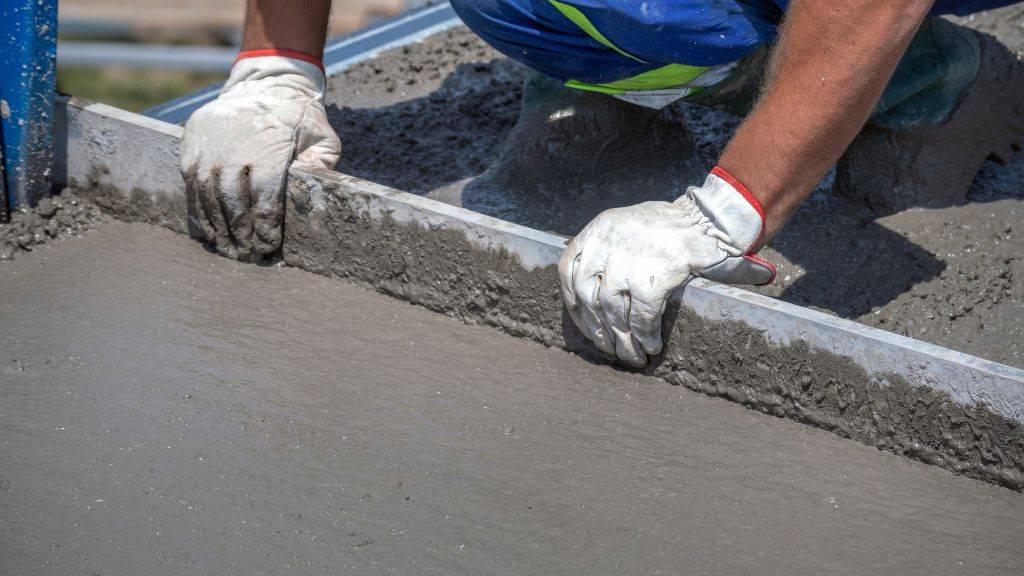
Concrete elements to review include curb lines that have cracked or shifted, sidewalk sections with trip hazards or uneven joints, loading dock aprons showing spalling or surface deterioration, and any retaining walls or steps that show movement or cracking. Concrete repairs, like asphalt repairs, generally need to happen before consistently freezing temperatures arrive, since curing time is affected by cold weather in a similar way.
Step 8: Line Up Snow Removal Before the List Fills Up
Fall pavement maintenance and snow removal planning are connected, even though they are often handled as separate projects.
A lot that goes into winter with fresh repairs, filled cracks, and clear striping is easier and safer to plow, since plow operators are not steering around potholes or trying to interpret faded lane markings under snow cover. Confirming a snow removal contract in fall, rather than waiting for the first storm, also means the property is not scrambling to find coverage once every other property in the area is doing the same thing at the same time.
Asphalt Services provides commercial snow removal alongside pavement repairs, crack filling, and sealcoating, which allows a property to coordinate fall maintenance and winter coverage with a single point of contact rather than juggling separate vendors for each part of the plan.
The Insider Mistake: Treating Fall Repairs as Optional Because Spring Will Be Fine
Here is a pattern that shows up on more properties than most facility teams expect. A fall walkthrough turns up several cracks and a couple of soft spots, and the decision gets made to wait until spring, since none of it looks urgent yet and the budget for the year is already tight.
By spring, the same cracks have widened into connected networks, the soft spots have turned into potholes, and the repair scope has grown well beyond what a fall crack filling and patching visit would have covered. What looked like a minor deferral in October often turns into a significantly larger repair line item by April.
The more effective approach treats fall repairs as the primary maintenance window, not a nice-to-have. Spring repairs should address anything winter caused that could not have been predicted, not the same list of problems that were already visible in October and simply left alone.
A Practical Example: A Distribution Center’s Fall Walkthrough
Consider a distribution center with a large employee lot, a truck court, and several loading dock aprons.
A fall walkthrough finds a network of cracks along the truck court where trailers regularly turn, a clogged catch basin near the employee lot that has caused standing water after every recent rain, faded directional arrows near the loading docks, and a section of concrete apron at one dock showing surface spalling.
A practical fall maintenance plan for a property like this might include:
- Crack filling and patching along the truck court before winter traffic makes it worse
- Catch basin cleaning and a drainage check near the employee lot
- Fresh directional markings and stop bars near the loading docks
- Concrete repair on the spalling dock apron before freezing temperatures affect the damaged surface further
- A confirmed snow removal plan covering the truck court, employee lot, and dock aprons
Addressing these items in fall means the property enters winter with a surface that can handle plow traffic and freeze-thaw cycling without the existing damage getting worse.

What to Look for in a Fall Maintenance Partner
Fall maintenance work is time-sensitive, which means the contractor handling it needs to move efficiently without cutting corners on curing time or base preparation.
Property managers should look for a partner that can show:
- The ability to walk a full property and prioritize repairs based on traffic and liability, not just visible damage
- Honest guidance about whether sealcoating still fits the calendar or should wait until next season
- Coordination between asphalt repairs, concrete work, drainage, striping, and snow removal, rather than treating each as an unrelated service
- Experience with commercial and industrial properties specifically, including truck courts, loading docks, and high-traffic drive lanes
- A realistic schedule that accounts for New England’s shrinking fall weather window
Asphalt Services has worked with commercial and industrial properties across New England since 2003, operating as a family-owned company based in Woburn, MA, with an additional regional office in Salem, NH. The team handles asphalt repairs, crack filling, sealcoating, striping, concrete work, site work, drainage, and commercial snow removal, which lets a property manager cover an entire fall maintenance checklist with one contractor instead of separate vendors for every line item.
Key Takeaway: Fall Is a Maintenance Window, Not a Waiting Room
Fall pavement maintenance is not about squeezing in a few extra repairs before the year ends. It is the last real opportunity to address the small problems now, while materials can still cure properly, instead of letting them grow into larger and more expensive repairs by spring.
If your commercial or industrial property has not had a full pavement walkthrough this fall, the time to schedule one is now, while there is still enough season left to act on what the inspection finds.
Asphalt Services offers site evaluations for commercial and industrial properties across New England heading into fall, with a clear plan for what needs repair now, what can wait, and how snow removal fits into the picture. Contact Asphalt Services today to get your property ready before winter decides the timeline for you.